Because every veil we sell is made-to-order, your special orders can be the exact length your bride needs. Whether you need a 36 inch “fingertip” for a petite bride, or a 155 inch “cathedral” for an extra long gown train, we can do it! Have a look at industry standard lengths and learn about the correct way to measure a veil.
Standard Lengths
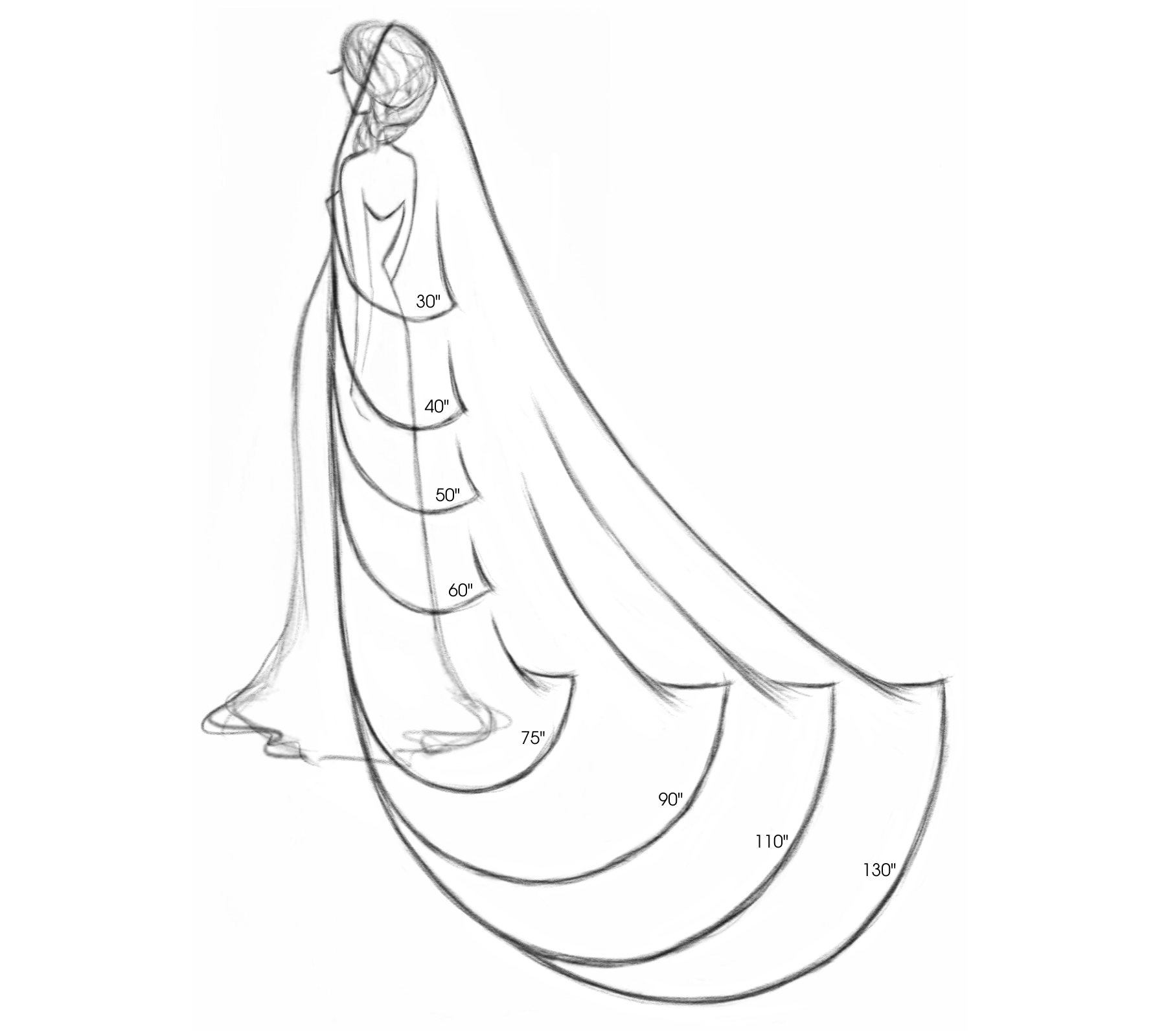
It is helpful to have a reference for the widely accepted standard veil lengths and their most commonly used names. Remember, however, that every veil you order from us is made-to-order…so your special order veils can be any length you’d like!
What follows are measurements from comb to bottommost center back on an average height bride.
Elbow: 30″ (76cm) falls to the elbow
Fingertip: 40″ (102cm) falls to the tip of the finger.
Waltz: 50″ (127cm) falls to the middle of the knee.
Ankle: 60″ (152cm) falls to the middle of the ankle.
Sweep: 75″ (190cm) extends just past the floor, creating a tiny train.
Chapel: 90″ (229cm) extends out onto the floor about 25″ (64cm).
Cathedral: 110″ (280cm) extends out onto the floor about 3 feet (1m)
Grand Cathedral: 130″ (330cm) extends out onto the floor over 5 feet (1.7m)
What Length is Best?
Is there a “right” answer for the length of the veil? Yes, but it’s not what you may think. You need to use your artistic eye (and that’s part of why you became a Stylist, right?) to look for the places where the veil can end without disrupting the flow of the gown. Then determine which of those options matches best to your brides overall vision for her look.
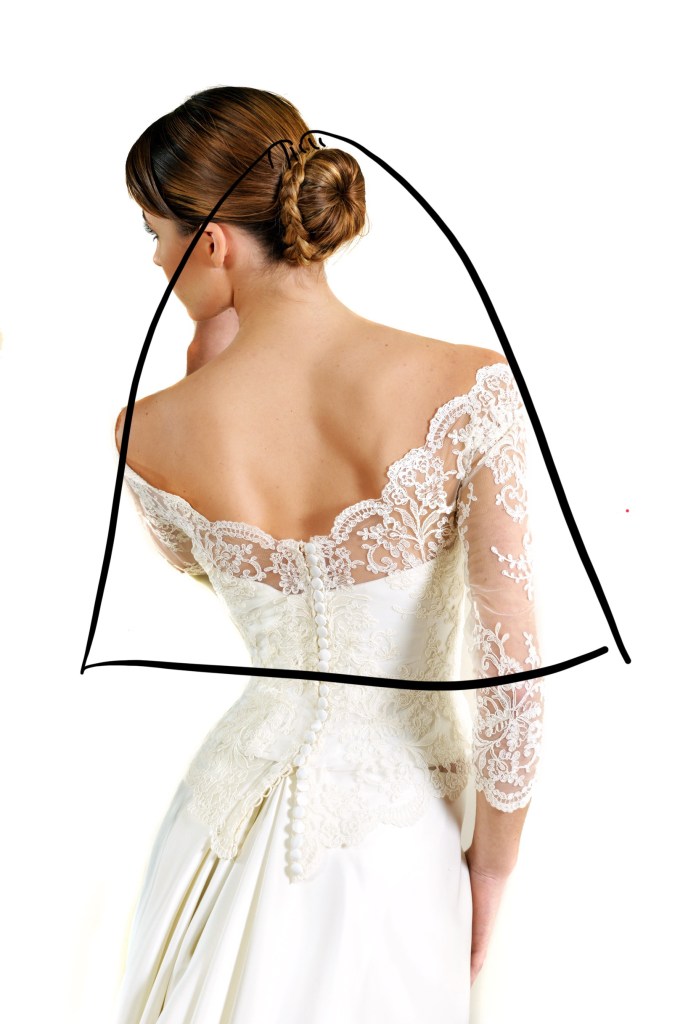
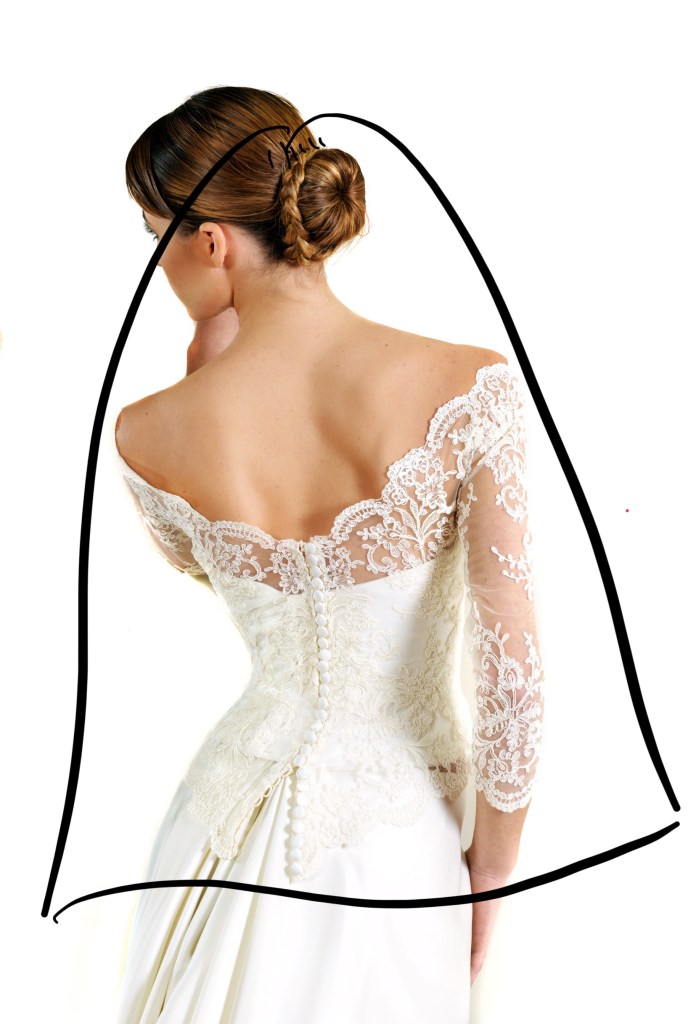
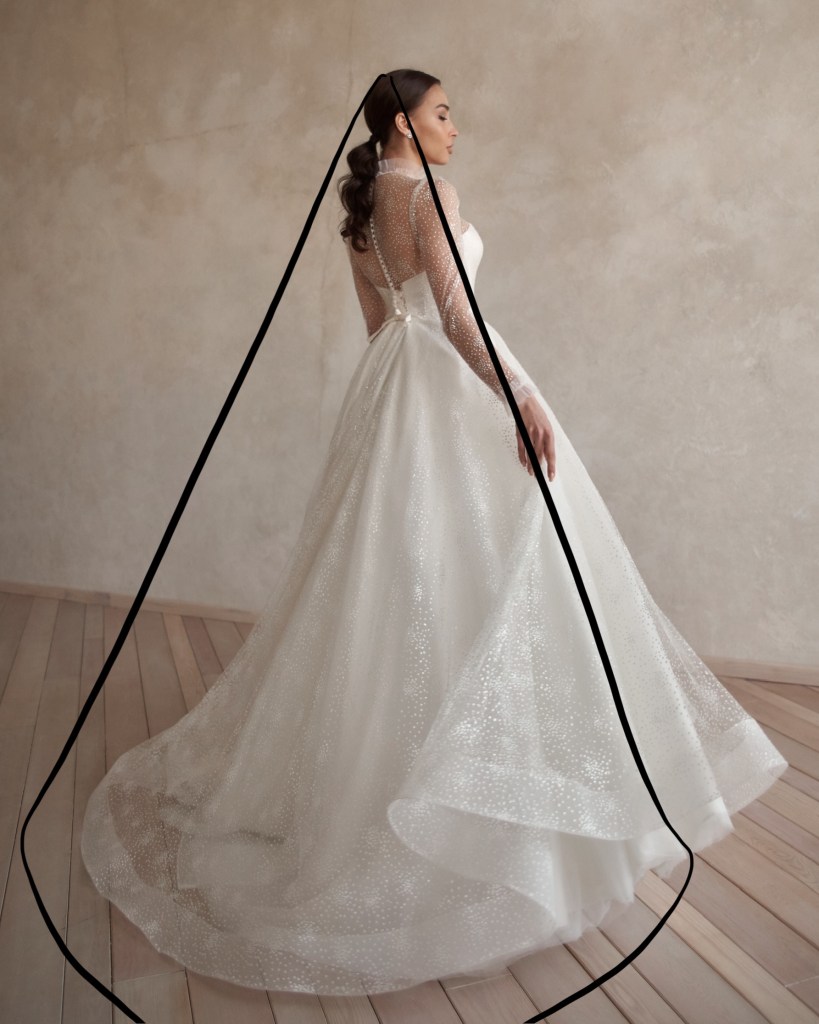
THE VEIL IS A FRAME Think of the veil edge/trim like a picture frame, and the detail on the back of the gown as the art. Try not to let the frame cut through the middle of the art. We’ve sketched a standard elbow length veil and a custom elbow-ish. Which do you think creates the best frame around the lace overlay, buttons and box pleating at the bum?
Bodice detail cut into two by the veil
Bodice detail entirely inside the frame
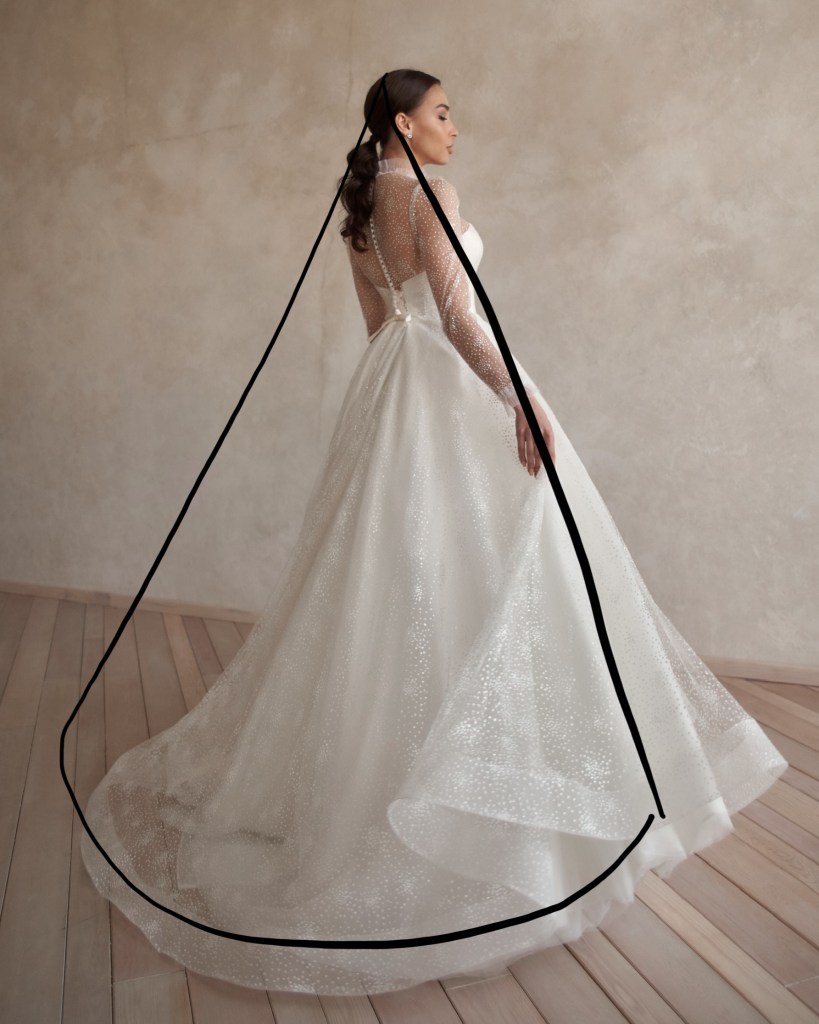
The same rule applies when you’re styling your bride with a floor-length veil. Below you see a veil that ends before the hem of the train vs a veil that ends just past it. Which looks more like the model has been professionally styled to you?
This length looks like an afterthought
This length looks perfectly tailored
Rules of Thumb
Generally speaking, a veil can safely end in three places with respect to any gown:
Just below where any bodice detail ends.
Just above where any train detail starts.
A minimum of 8-10″ (20-25cm) past the hem of the train.
How to Measure
When measuring for a veil you need two things: a long-length fabric tape measure and a second pair of hands (another Stylist, your bride, or one of her guests). This quick video will walk you through the easy steps. Or, keep scrolling for written step-by-step instructions
Step-by-Step Instructions
FOR BODY LENGTH VEILS
While your bride is in her gown, place the top of your fabric tape measure about where she plans to wear her veil.
Ask your bride (or a fellow Stylist) to hold the top of the tape measure in place, and let the rest of the tape drop down the center of her back.
Note the length that shows on the tape measure at the best place for the veil to end.
We make our veils in any full inch length (no partial inches or decimal places please–our fabric doesn’t allow us to be quite that precise.)
FOR FLOOR LENGTH VEILS
While your bride is in her gown and not on the pedestal, place the veil comb into her hair approximately where she plans to wear it. Shoe height doesn’t matter.
Ask your bride (or a fellow Stylist) to hold the top of the tape measure in place, and let the rest of the tape drop down the center of her back.
Open the gown train out to its fullest shape.
Allow the tape measure to lay softly against the center back of her gown, the way the veil will. Do not pull it tight.
Note the length that shows on the tape measure at the best place for the veil to end.
We make our veils in any full inch length (no partial inches or decimal places please–our fabric doesn’t allow us to be quite that precise.)